
AUXILIARY SERVICES: RPF/RSF
Smarter Power Plant Operations
Hybrid control that enhances efficiency, stability, and sustainability
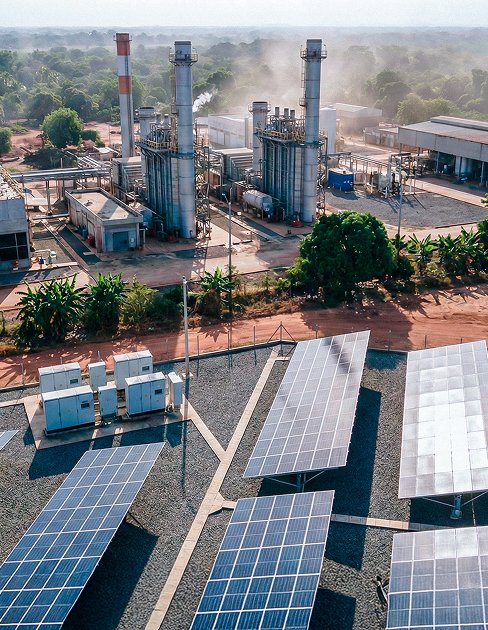
Hybrid solution that optimizes the operation of thermal power plants by integrating solar energy and advanced control systems.
Through ramp control and startup optimization, this system enables the plant to provide Primary and Secondary Frequency Regulation (RPF/RSF), generating additional revenue, reducing fossil fuel consumption, and decreasing wear and maintenance on traditional generation equipment.
Performance Meets Sustainability
Less fuel, less wear, more stability
Fuel Savings
Thermal units operate more stably, reducing fuel consumption by delegating part of the load to the solar source.
Reduced Wear & Maintenance
Fewer startups, shutdowns, and rapid power fluctuations (ramps) lessen mechanical and thermal stress, extending the lifespan of turbines and generators.
Greater Efficiency & Stability
Improves overall plant efficiency by optimizing operations and ensuring frequency and voltage stability.
Sustainable Backup
Introduces a renewable energy source, contributing to the decarbonization of the generation matrix without compromising reliability.
Frequently Asked Questions About Auxiliary Services
Answers to guide your clean energy journey
What do RPF and RSF mean, and how does this solution help in providing them?
RPF and RSF stand for Primary and Secondary Frequency Regulation. The hybrid system, with its rapid response, ensures that the plant can provide these auxiliary services more efficiently and reliably, generating additional revenue.
How does solar hybridization contribute to greater plant efficiency and stability?
It introduces a Sustainable Backup power source that handles rapid variations. This allows the thermal unit to maintain more linear operation, ensuring frequency stability.
Does the system replace traditional generation equipment?
No. The solution is designed as an optimization and integration of solar technology and advanced control. It does not replace, but rather complements and protects traditional generation equipment to extend its lifespan.
How does this solution contribute to the decarbonization of the thermal power plant?
It introduces a renewable energy source (solar) as dynamic support, reducing the consumption of fossil fuels and the operating time of the thermal unit, thus contributing to the decarbonization of the plant’s generation matrix without compromising reliability.
What is the difference in fuel savings between this solution and others?
Fuel savings come not only from the replacement but also from the more stable operation of the thermal unit. By delegating intermittent work to solar energy, the fossil fuel generator operates more continuously and efficiently, avoiding the high consumption associated with load.